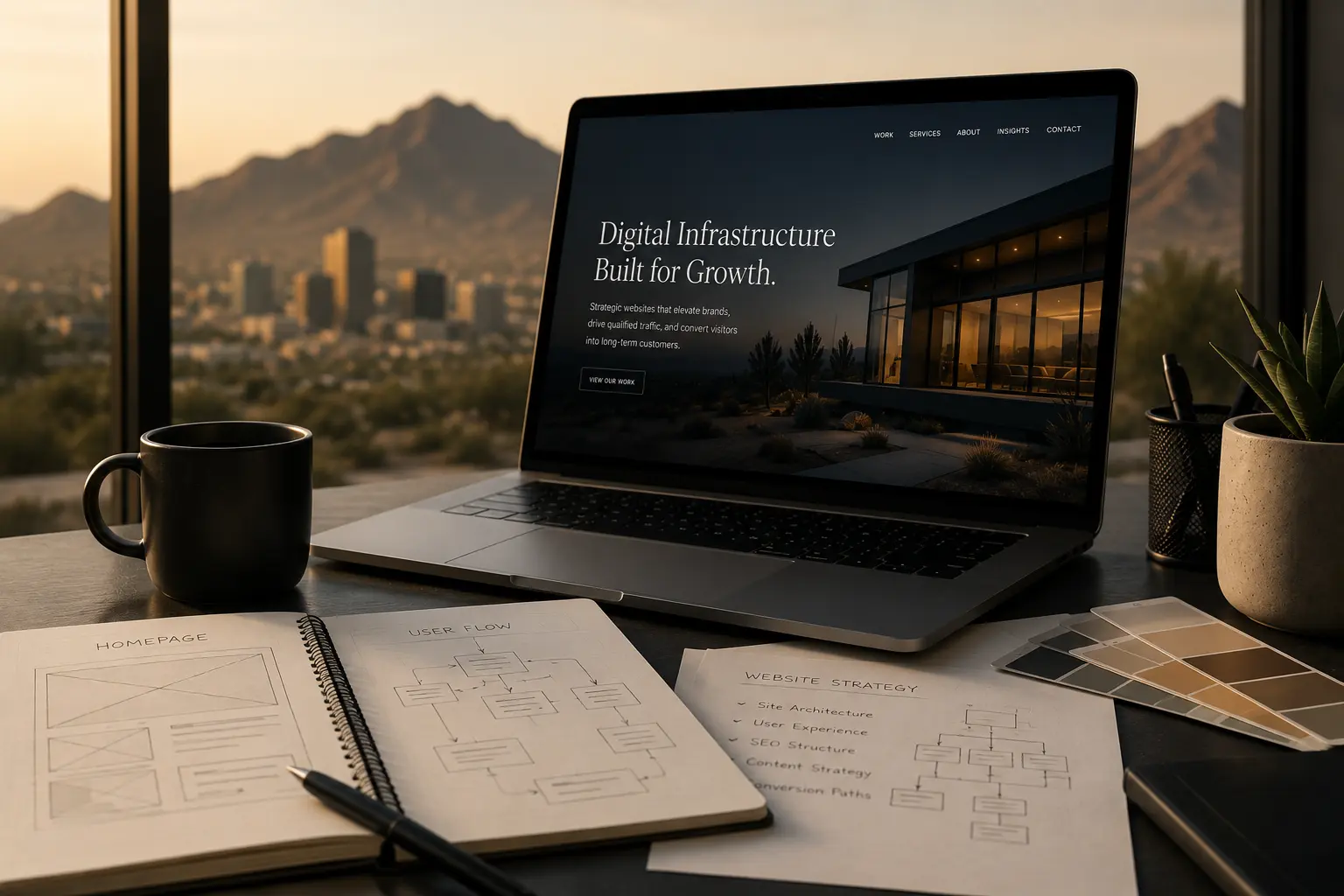



For most companies, a website is the primary place where potential customers first interact with the brand.
It serves as the central hub for marketing campaigns, product information, lead generation, and brand communication.
Because of this, website design must go beyond visual appearance. A high-performing website must communicate clearly, guide users through information efficiently, and support long-term digital visibility.
Strategic website design ensures that a website functions as both a communication tool and a business asset.
One of the most important roles of a website is to communicate value clearly.
Visitors often decide within seconds whether a company appears trustworthy and relevant to their needs. Clear messaging, logical page structure, and intuitive navigation all contribute to a positive user experience.
A well-designed website presents information in a way that helps visitors quickly understand what the company offers and how it can help them.
In addition to presenting information, modern websites must support lead generation.
This means structuring pages to guide visitors toward meaningful actions such as scheduling consultations, requesting quotes, or contacting the company for more information.
Strategic calls-to-action, well-organized content, and thoughtful page layouts all help convert visitors into qualified inquiries.
A website must also be designed with search visibility in mind.
Search engines rely on clear page structures, organized content, and technical optimization to understand what a website represents. When these elements are implemented correctly, the website becomes more likely to appear in relevant search results.
This visibility allows companies to attract new customers through organic search rather than relying solely on paid advertising.
Website performance plays an important role in how visitors interact with a site.
Fast loading speeds, responsive design across devices, and well-structured pages ensure that users can navigate content easily.
Poor performance often leads to high bounce rates and lost opportunities, while optimized websites encourage deeper engagement.
A well-designed website should support future growth.
As companies expand, they often need to add new services, publish additional content, and integrate new digital tools. Scalable website architecture ensures these updates can happen without rebuilding the entire site.
By approaching website design as long-term digital infrastructure, businesses gain a flexible platform that can evolve alongside their growth.

Discover additional articles on brand identity systems, website architecture, SEO, and scalable creative execution for growing companies.